Weavings is a monthly reflection that is the collective effort of the Wheaton Franciscan Covenant Companions and Sisters to provide spiritual nourishment that helps us feel God’s presence in daily living and invite an openness to God.
Thoughts on “Story of a Soul: The Autobiography of Therese of Lisieux”
by Covenant Companion Book Club 2022
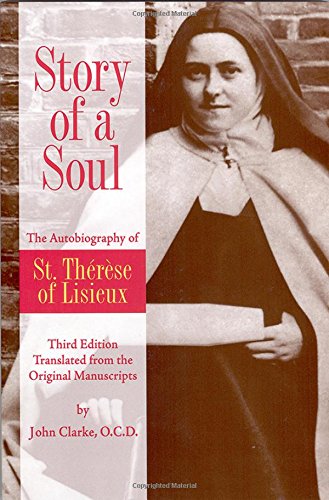
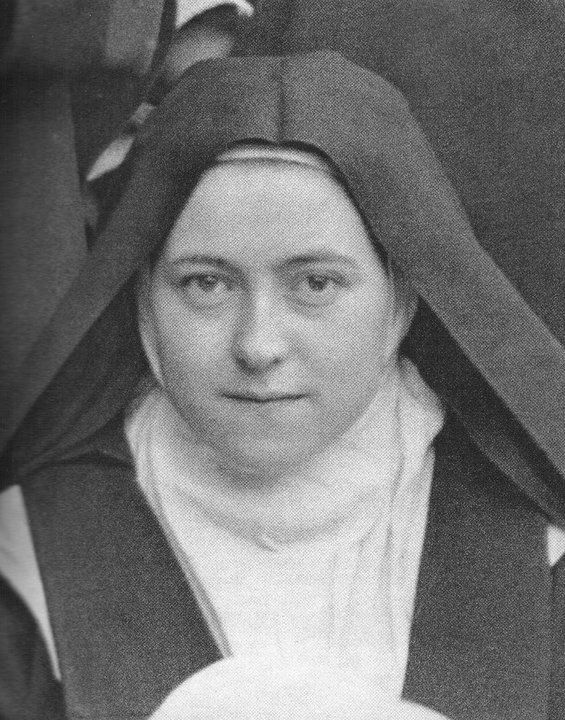
Winter of 2022 provided an opportunity for several Covenant Companions to gather together to glean nuggets from the life of Therese of Lisieux. The fact that the “little flower” was named a Doctor of the Church was intriguing. What did Therese have to say to a group of Franciscans desiring to grow spiritually? As it turned out, she said quite a lot! The following book club participants each shared their thoughts in this reflection: Pat Faivre, Faith Devine, Dave Pfeifer, Joanne Pfeifer, Carol Sejda and Connie Gaul.
Thoughts about Therese’s early years focused on her being “a much-loved child in her family,” “coddled” even. But her childhood was not without loss and sadness.
Her mother died when she was only four years old, a loss which she felt deeply and left her at times unable to control her feelings and tears. When attending school, she did not fit in and felt bullied by many of her classmates. This led one companion to recall such episodes in her own life and the resulting long-term effects she felt.
Therese knew her religious vocation early in life and did all she could to be admitted to Carmel by age fifteen, an unusual occurrence. This included a trip to Rome where she laid her desire before the Pope! We Covenant Companions marveled at the “spunkiness” and passion of this teenager. We further read with wide eyes as Therese recorded evading her father while touring the Colosseum and “boldly” entering a restricted area to “gather up a few stones” at the site where first Christians were martyred.

We admired Therese’s beautiful writing and the ” Franciscan love of creation” that she displayed as she described what she saw on the train trip to Rome: “There was a huge lake gilded by the sun’s last days, it’s calm waters blending their azure tints with the fires of the setting sun.”
One companion was especially touched by Therese’s poetic description of Jesus’s garden: “I understood how all of the flowers He has created are beautiful, how the splendor of the rose and the whiteness of the lily do not take away from the perfume of the little violet or the delightful simplicity of the daisy….and so it is in the world of souls.” We appreciated this inclusive description and several readers mused about their own gardens and how the smallest flower would often be one that was sought and that gave great delight.

But what about Therese’s spirituality? One companion recognized that Therese’s spirituality was firmly based on scripture, much as Francis. Her “little way” was seen as easily accessible to all. It is a way of coming to God with empty hands. One companion saw it as an invitation to “come as you are.” Therese used texts from the old and New Testament as a basis for her teaching. One example is from Wisdom 6:7–“For to him that is little, mercy will be shown.”
Another reader noted the similarity with Franciscan poverty/minority. A companion shared a reflection from Richard Rohr where he spoke about human intimacy leading to divine intimacy, but he spoke of Therese as an exception. She first learned to be vulnerable before God and then transferred that vulnerability to human relationships. Therese also focused on a God of love, not judgment and punishment.
While we pondered insights, we also found some of Therese’s acts of humility and suffering to be puzzling from our 21st Century perspective. For example, when a sister unknowingly yet repeatedly splashed dirty water in Therese’s face while they were both doing laundry, Therese chose to suffer in silence rather than move away or mention this to the sister. She wrote: “I thought I would be foolish to refuse these treasures which were being given to me.”
Nevertheless, Therese’s story offered much to inspire. At the end of her life at age 24, Therese experienced profound physical distress and a prolonged trial of darkness in her vibrant faith. Yet she never ceased “making acts of Faith.” “It was no longer a matter of trying to love God, it was all a matter of allowing God to love her.”
We would like to close this reflection with Therese’s thoughts on prayer. It struck a chord with us that Therese experienced drowsiness, inattention, and lack of fervor with traditional prayers (reciting the office, praying the rosary). Instead she said, “For me, prayer is an aspiration of the heart, it is a cry of gratitude and love in the midst of trial as well as joy; finally, it expands my soul and unites me to Jesus.” A Covenant Companion responded by saying: “We need to pray -find a way that you are comfortable with and pray.”
So ends Book Club 2022. It provided the opportunity for holy sharing as well as precious companionship and we are grateful.